Friday, November 4, 2011

War on Malaria

When most people think of disease in Africa, HIV/AIDS typically comes to mind as the most severe problem; however, malaria claims more lives annually and creates a miserable yearly routine for many Africans.  During the rainy season in Malawi, which runs from November to April, many villagers end up contracting malaria multiple times.  It is difficult to find a Malawian family that is untouched by the disease, which is the leading cause of death in the country.  In a “From the Field” article on the Malaria Vaccine Initiative’s website, the Jackson family from Chakwindima, a rural village west of Lilongwe, is profiled.  Despite taking precautions, the Jacksons contracted the disease a total of 14 times between 5 family members over the course of the 2007-2008 malaria season.

“We sleep under bed nets every night,” said Jacques Jackson, 36, the father.  “But we also spend some time in the early evening outside,” a time thick with mosquitoes, which transmit the disease-causing parasite to humans when they bite them.

Mary Jackson, the mother, “prepares food for us and cooks outside.  The children like to be close to their mother, and so they are outside with her.  And maybe they even are bitten when they sleep under the nets, because they often roll right up against the nets, where the mosquitoes can get them.”

http://www.malariavaccine.org/FromthefieldSeptember2008.php

By James Ratemo, jratemo@ke.nationmedia.com
Posted  Wednesday, October 19  2011 at  15:32
In fact, malaria claims close to 800,000 lives annually, most of which are young children living in Sub-Saharan Africa, and costs African countries more than $12 billion in lost GDP.  With staggering figures such as these, it is easy to see how a potential solution to the malaria crisis could change the lives and futures of millions of Africans.  Although malaria vaccines have been in the works for decades, none have come close to the success of the recent Phase III trials of RTS,S, a drug first developed by GlaxoSmithKlein over 25 years ago to be used by the U.S. military.  More recently, the project has been backed by grant monies from the Bill & Melinda Gates Foundation, which is committed to eradicating malaria worldwide.

Preliminary results from Phase III trials of RTS,S, released October 18, 2011, show that it protected nearly half of the children who received it with acceptable safety and tolerability.  Clinical trials will include tests of over 15,000 children and are scheduled to continue through 2014.

To read the entire article:

http://www.nation.co.ke/News/africa/New+vaccine+fights+malaria+better++study+shows/-/1066/1258052/-/item/0/-/frsujp/-/index.html

And check out this video from the Bill & Melinda Gates Foundation, whose $200 million grant is contributing to the development of RTS,S:


Friday, October 21, 2011

Educational Follow-Up: Mkhosi and Matapila

Muli Bwanji!
Reinier and George are back in Lilongwe after spending two awesome weeks in two of our potential partner communities: Matapila and Mkhosi.
We’re glad to say that our experience could not have been any better and the Educational Follow-Up Program has proven to be a big hit in rural Malawi!
Upon arrival, we received a warm welcome by all the teachers, students, and community members who remembered World Camp from our camps and homestays this summer.
The headmasters of both schools invited us to stay with them for the week, something they probably regretted after realizing that we couldn’t stop asking them about education, HIV/AIDS, activism clubs, hyenas, and black mambas. However, all these questions as well as meetings with key stakeholders in the communities helped us to develop a clear understanding of the structures, struggles, and opportunities that exist. We soon became amazed about how much was being done by the village headmen, SMC/PTA committees, support groups, and many others despite the huge challenges that these communities face. Also, the constant quest for skills and training instead of “things” or “kwacha” really enabled us to have insightful talks about moving forward.
All these key stakeholders brought their energy, ideas, and concerns to our Leadership Workshop at the end of the week. Seeing the SMC/PTA talk about their responsibilities, village headmen discussing with students how they could help clubs to be more active, and teachers brainstorming about ways to increase peer education could not have been more inspiring. Our field assistants did an amazing job facilitating this process, because truly seeing the community discuss educational improvement among each other was exactly what we hoped for.
Last, during both weeks we started Empowerment Writing Workshops with St. 8 students. We had contacted NGOs, World Camp alumni, and other experts on how to effectively teach young people about creative writing but still were a bit nervous to see how it would play out in practice. We worked closely together with all the teachers and carefully explained what short stories, poetry, and journaling are all about. The students insisted to write in English and both the boys and the girls were excited about becoming awesome writers. We told them that they should see the journals that we gave them as new friends that they can talk to about anything, which helped to really make it an empowerment writing class.

Read Alefa's introduction to her short story to get a bit of an idea what their stories were about:
“My Birthday”

“A long time ago there was my birthday. But this day was very happy because there were many people on this day.
I welcomed many friends, these friends are Charity, Dyna, Cathirin and Yustina.
This birthday started at 2:00pm and finished at 6:00pm.
When it finished there were two girls and two boys, these children were going to the forest at 7:30pm and this one girl was HIV positive.
At the forest was sexual intercourse.
Because of sexual intercourse they contracted HIV. Then all the girls died and the boys contracted HIV.
When I go there two years later the boys are also dead.
Many people in the area suffer from HIV and AIDS and in our area, population is decreasing and children of orphanage are increasing.”
It was amazing to see that many of the students were able to give some of their sad stories a positive twist by looking critically at themselves and describing how they could do something to put a smile on their own face and on that of others.
These students definitely made us smile, and writing this blog puts a smile on my face again. What makes me even happier though is thinking back of how involved, excited, and helpful all the teachers were during these workshops. Seeing these teachers work incredibly hard in overcrowded classrooms and being able to provide them with new ideas on how to empower their students is what cannot make me stop smiling!
Tuesday, September 27, 2011

Let's make sure we water it!

Muli bwanji!
It has been over a month since the last interns and coordinators left Lilongwe after two awesome summer sessions. John, Vito and Angoni still talk about how much fun they had with the mzungus over the summer and they hope that you will all come back sometime soon!
Over these past 4 weeks Reinier and Michael have been working hard on developing ways in which we can make our work even more sustainable. Many brainstorm sessions, phone calls, and headaches later we developed what we call the “Educational Follow-Up Program”.
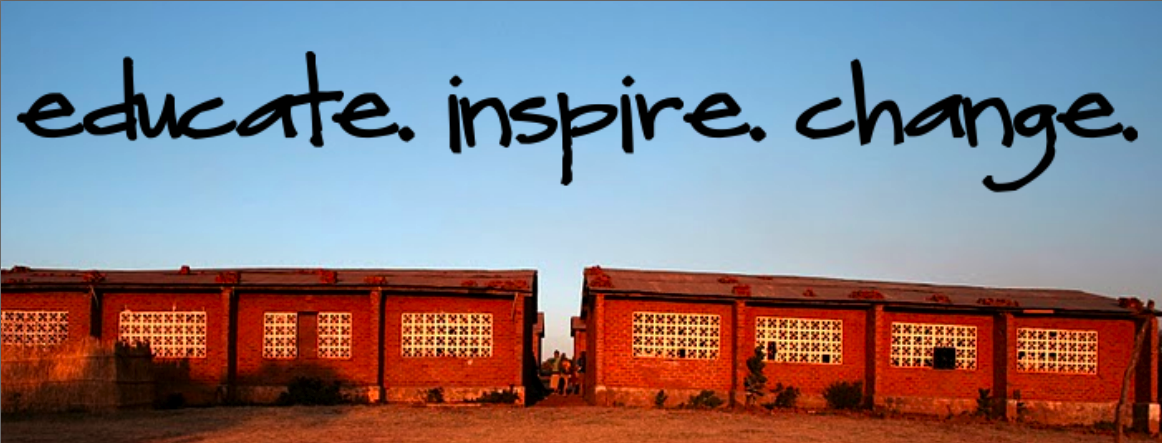
This summer we started meeting with key stakeholders in our target communities: the School Management Committees and Parent Teacher Associations. These committees argued that they would like to be more involved with World Camp’s activities in order to make the entire community part of educational improvement. Their call for community participation and follow-up support encouraged us to return to 2 potential partner communities, Mkhosi and Matapila, in order to respond to this identified need. Both these communities struggle with high student/teacher ratios, many social barriers related to HIV/AIDS, and a general lack of basic knowledge on HIV.
Our team, consisting of Michael, Reinier, Chikabachi, Cyrus, Cathy, Winter, and George, will be working on several activities.
First, we are going to conduct an in-depth community assessment in order to better understand issues surrounding stigmas, healthcare, educational outreach, and many others as well as the role of the local CBO in this. This information will help us develop a clear picture of our potential partner communities and enable us to more effectively conduct possible future activities.
Second, Reinier and George will be staying with the community for a week to facilitate an empowerment writing workshop. We have identified that our empowerment sessions need more sustainability and strongly believe that creative writing could help students get certain things off their chest and make sensitive topics discussable.
Third, at the end of the week we will conduct an intensive educational follow-up workshop. We will divide the community up into 4 groups (teachers + headmaster, community members, students, and the SMC/PTA) and each field assistant will work with a specific group of their choice. We’ll be strengthening activism clubs, provide follow-up teacher training, increase awareness among the SMC and PTA of their responsibilities in improving educational standards, and conduct HIV/AIDS workshops with the wider community. At the end of the day each group will participate in a collective “Jungle Walk” and present their action plan on working towards educational improvement related to HIV/AIDS to the other groups.
We are all very excited about this as we truly believe that this follow-up program will increase the continuation of our impact in our partner communities!
Wangari Maathai once said “until you dig a hole, you plant a tree, you water it and make it survive, you haven’t done a thing. You are just talking”. In a certain sense this relates closely to World Camp’s educational activities at our partner communities: we conducted educational camps and teacher training, now let’s make sure we water it and make it survive!