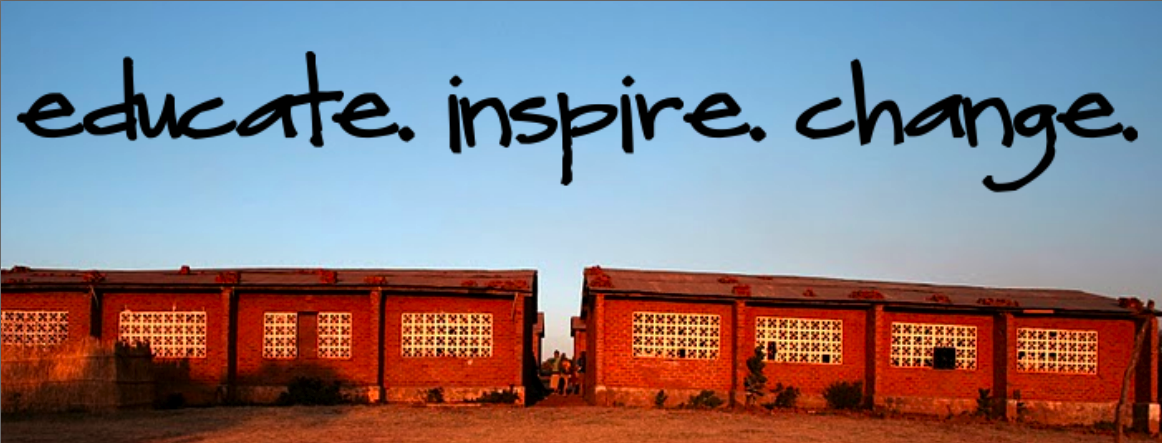

“My time in Malawi was an amazing, humbling, eye-opening experience. It always makes the world seem a little bit smaller whenever you travel somewhere new and see that apart from the differences, we all have a lot of similarities” - Caitlin Sheffield, International Business student and participant in Malawi program
Can a study abroad experience change lives?
Eleven students from Appalachian State University rang in the New Year this January on the way to the airport, bound for Southern Africa as part of the Walker College of Business’ first study abroad program in Malawi. They planned to learn first-hand about managing Non-Governmental Organizations (NGO’s) and the obstacles to Malawi’s economic development. They came back with a plan to help one village find a sustainable way to fund programs serving orphans and those suffering from AIDS in their community.
.JPG)
Malawi is one of the ten poorest countries in the world and its economic struggles are written on the landscape. A drive from the airport to old City Center passes rolling hills, almost bare of trees, dotted with the growing stalks of corn that will feed the country this year. With the electrical grid only reaching 4% of the population, deforestation is mostly driven by the need for fuel to cook and heat homes. In the city, long lines of vehicles crowd the streets near gas stations because petrol supplies are scarce. This year’s profits from tobacco exports were not sufficient to cover the cost of enough imported oil. Reliance on tobacco as the main export and corn as the staple crop has left the population vulnerable to changing environmental and economic factors. The HIV/AIDS epidemic has hit hard here, combining with other health factors to reduce the life expectancy to about 38 years. Hundreds of thousands of children have been orphaned as parents succumb to the virus.
World Camp hosted the group during the program. Through their connections, students met with Jewish Heart for Africa, a provider of solar energy technology, and Never-ending Food, a permaculture and nutrition project. They also learned more about the tobacco industry and visited the home of William Kamkwamba, author of the bestselling book, “The Boy Who Harnessed the Wind,” which tells of William’s experiences building a windmill to bring electricity to his home. Students traveled to Zambia for a photo safari and spent a day on the shores of Lake Malawi, learning about exports of aquarium fish and alligator hides, as well as local service projects run by the Cool Runnings Lodge, which reinvests 45% of profits into the community.

The final activity was a service project and homestay in the village of Mchezi a short drive from the capital along the highway to Salima. Moments after leaving the smooth tarmac, the road to Mchezi becomes rutted and rocky and full of people, winding through low block and mud structures with thatched or corrugated roofs. Such a scene is common, however this village is unique in one particular way. When this community saw AIDS ravaging its population, they organized to take care of the sick and orphaned and the Mchezi Community-Based Organization (CBO) was born.
Since then, the CBO’s activities have expanded to provide home-based care for 150 AIDS/HIV patients in the late stages of the disease, food and supervision for 3,700 orphans, an early childhood development program serving 600 children and job training programs for community residents. These efforts are supported by grants from various governmental and non-governmental organizations. Unfortunately, when funding dries up, the efforts can’t continue. A fundamental challenge is trying to make these efforts sustainable, independent of the whims of granting institutions. And this is where our business students found their opportunity to have a positive impact.
The directors of Mchezi CBO are hoping to fund community efforts through the construction of a corn mill. Currently, village residents transport their corn several kilometers and pay to have the corn milled into flour. Students did a study identifying the start-up costs of establishing a mill in the village, assessed the monthly operating costs, determined the projected revenue from milling fees and found that start-up costs could be recovered in the first year of operation. The revenue generated from the mill thereafter will fund the activities of the CBO, reducing the reliance on outside donors. Further, the mill will create several jobs in the community.
“Getting the mill running will cost around $25,000 in US currency,” estimates trip leader, Dr. Meznar.
Students have now formed a club to raise funds for the mill. The project allows Walker College students to apply the skills they have learned in the business program to promote sustainable development in one of the neediest parts of the world.

As Ethan Herman, an entrepreneurship student and leader of the Maize Mill Project, stated, “The Mchezi Maize Mill Project has given an opportunity for Appalachian students to make a difference. Underprivileged communities are reaching out for help and we have been given the opportunity to capitalize... Daily, the project is putting useful value to my skills learned at the College of Business… Malawi has changed my life in numerous ways. It opens your eyes to let you see the world in another way. I'm fortunate to have the things I do. When you see people struggling for food, it will change you too.”
For more information on the Mchezi Maize Mill project, please contact Ethan Herman (hermanec@email.appstate.edu). More information on the Malawi study-abroad program, including photos and student blogs, can be found at www.international.business.appstate.edu


